
Chapter 11
Leaving India

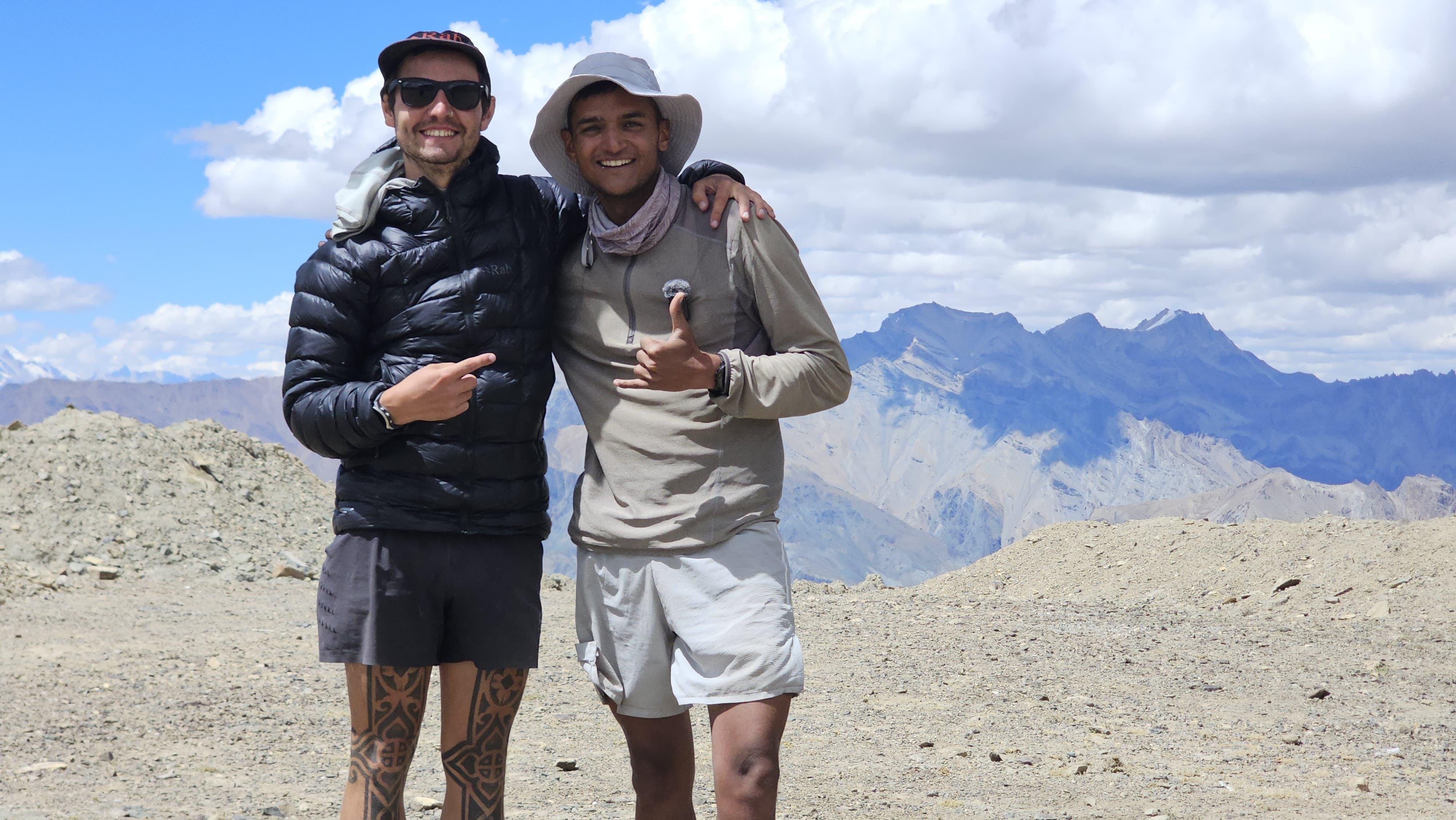
The drive from Kishtwar to Zanskar is a long and arduous one, and takes almost as much time as hiking between them. On the road between Gulabgarh and Killar, my companions helpfully informed me that this was 'the most dangerous road in India'. I'm not sure by what measure, but as we rattled along the single lane carved out from the cliffside high above the Chenab River, I could believe it.
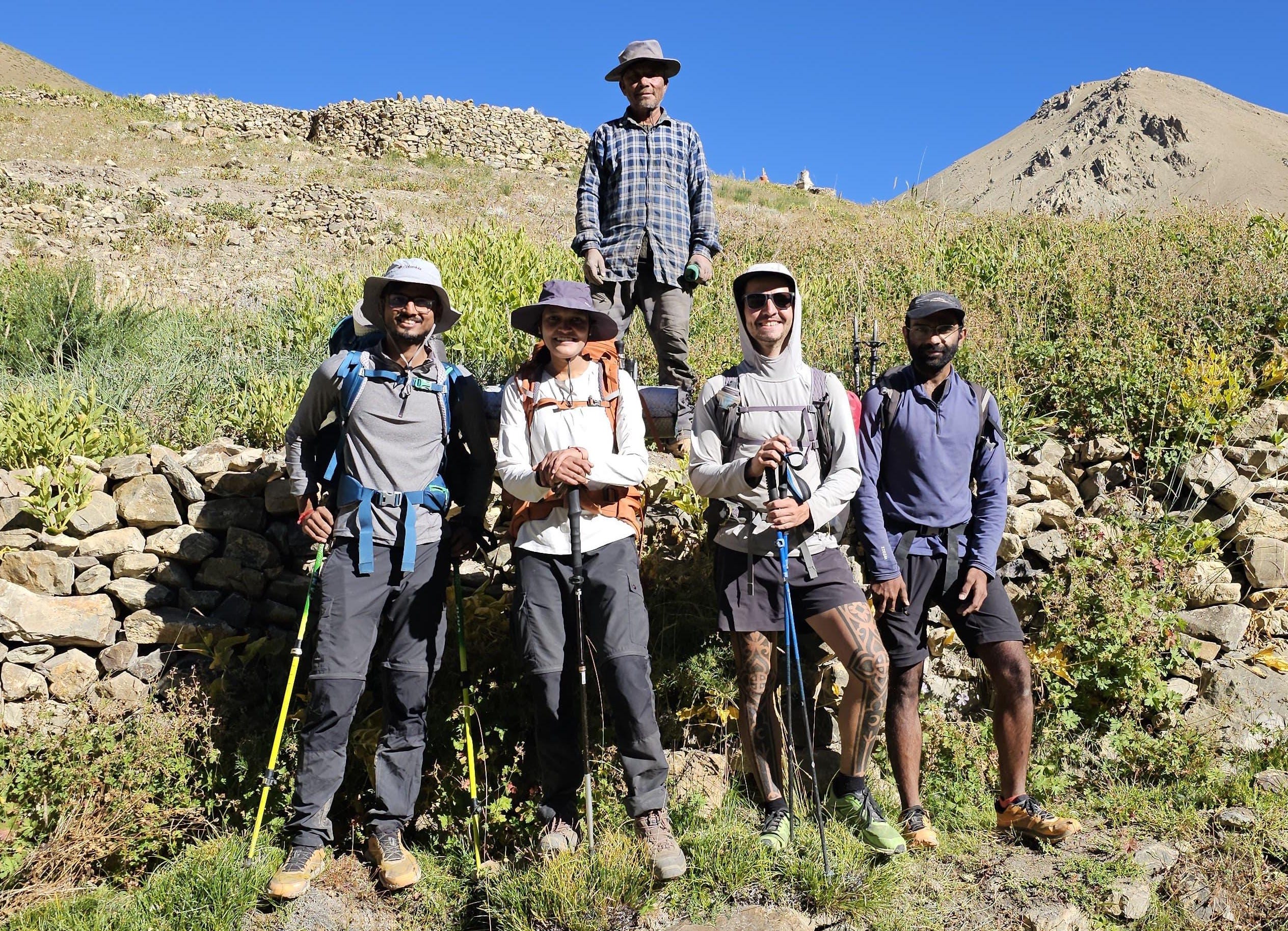
Two days later, we reached our destination. Instead of going all the way back to Padum, we'd decided to stop at a village called Purne, where we could hike to the famous Phuktal Gompa, a historic monastery built around a huge natural cave above the Tsarap Chu. From here, we would return to our beloved Shade village, and then hike out to Zanskar over the Stongde La (5140m), returning to Padum within 4 or 5 days. Our group of six had now become five, as Hemu had opted to return to Manali.
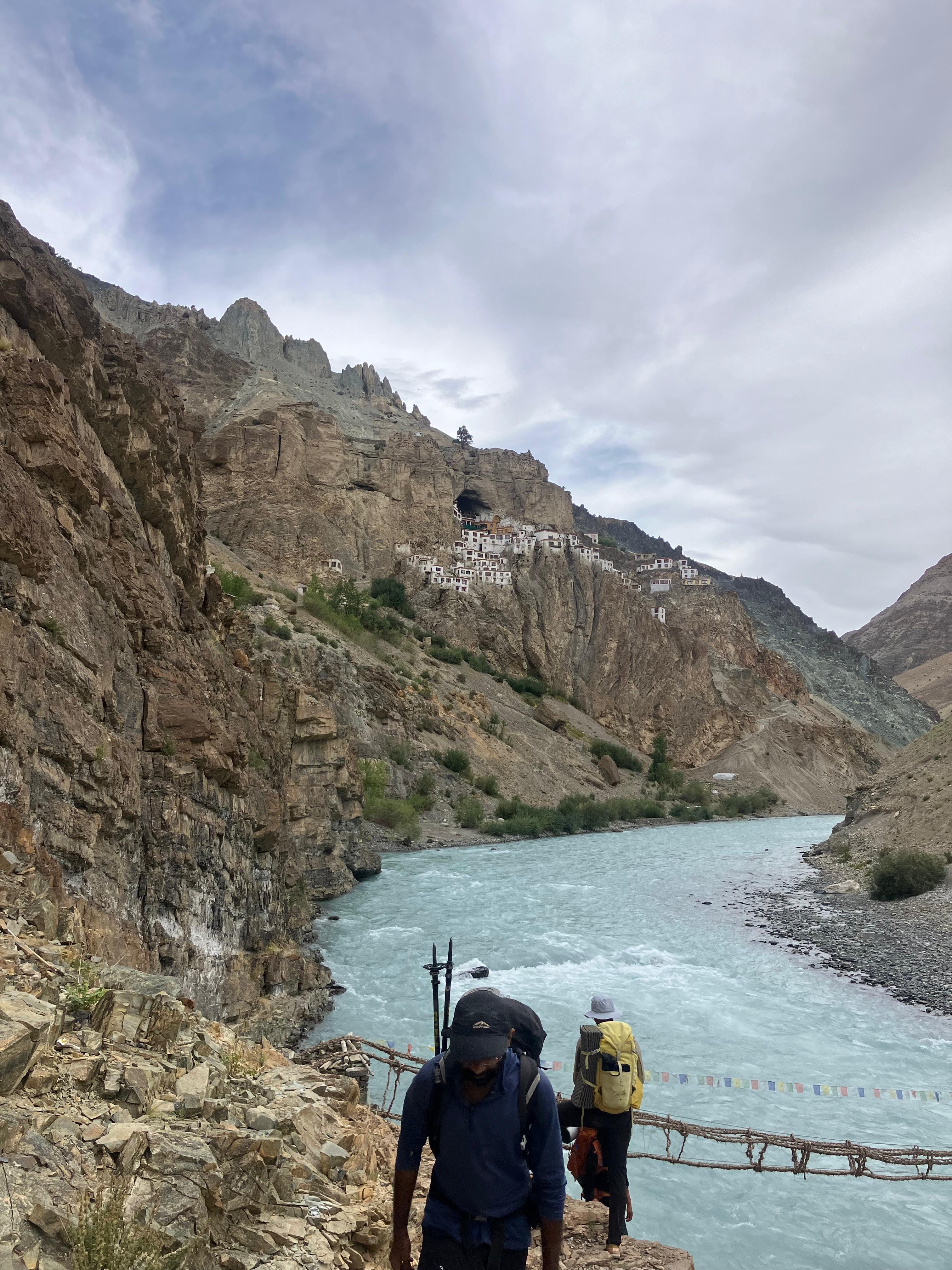
The first afternoon was an easy hike to the hamlet of Yugar, opposite Phuktal on the other side of the river. In the morning, we crossed a Burma bridge made of jute rope, and climbed up to the monastery where we were greeted by a couple of old lamas. From here, it was a long rolling trail above the river gorge which would lead us all the way to Shade, where we had spent my birthday a month prior. Acho welcomed us with a broad grin, and seemed genuinely happy that we'd returned. We decided to spend a full day in the village to let Raj, Kunal and Lata get the full Shade experience, and so we spent it chatting with Acho, lazing around the house, and helping to prepare vegetables for dinner.
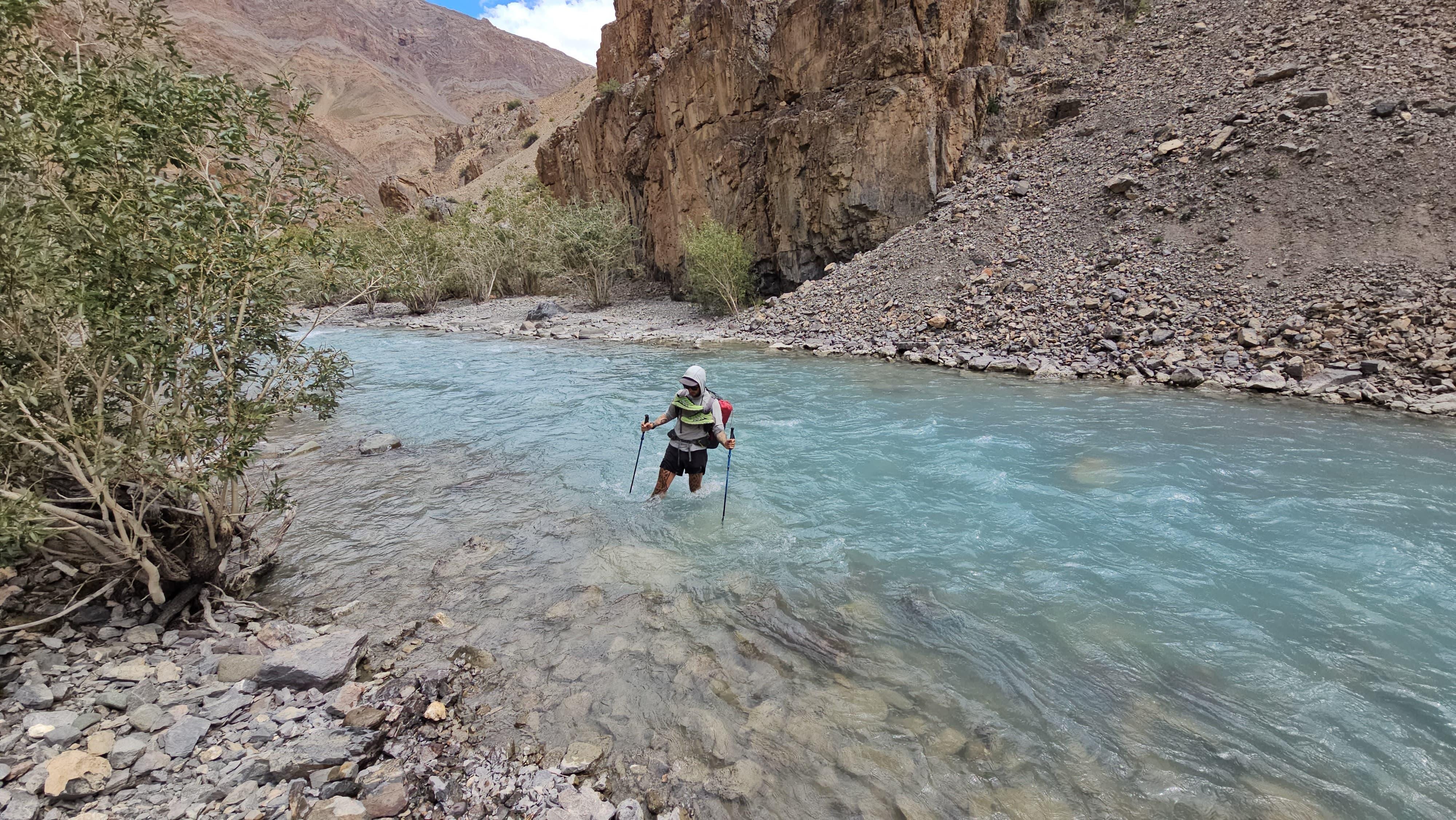
We left the next morning towards the pass. After ten or so kilometres, the trail meets the Shingri Chu, a river which we had to cross a dozen or so times. Water levels were kinder in late August than they'd been a month before, but the crossings were still tricky enough to make you pay attention. Acho had told us about a cave before the pass which would be big enough to camp in, and we found it just as evening arrived. It was spacious, perfectly sheltered by the overhanging roof, and big enough for a bonfire. In Ladakh, willow trees often grow along the riverbanks, and so there was plenty of firewood, which we gathered as the light faded.
It was a beautiful evening sat around the fire, watching stars slowly appear in the sky. I'm not sure if it was lying in that cave, or on the climb the next morning, but somewhere along the way I decided that the Stongde La would be my last pass in Ladakh. I still had a few weeks left in India, and Manav was going back to Leh to wait for weather windows and climb more mountains, but I was worn out. We'd barely dropped below 3500m for over two months now, and the lingering cough from the Hagshu La was a constant reminder. I craved thicker air, green valleys, and the comforts of Vashisht for a couple of weeks to properly recover. And so it was settled. Back in Padum I said my goodbyes to Manav and Raj, and Lata, Kunal and I headed south for Manali.
I found Vashisht very much as I'd left it, with the same friendly faces still hanging around. The trails were a little more overgrown, and it was apple harvest season, so the locals were busy carrying baskets down from their orchards. I went on a few easy runs through the forest, but the body mostly called for rest, and besides the last of the monsoon storms were still rolling through the valley. After two months in the arid climate of Ladakh, the rain was a welcome change, and it felt great to sleep at 2000m again.
Naturally, as my time in the Indian Himalayas drew to a close, I came to reflect on the last 6 months. Overall, I'm satisfied with my efforts. I've hiked roughly 1500km, with over 80,000m of elevation gain (which is the equivalent of hiking from sea level to the summit of Everest and back, nine times). Of course, I could’ve done more, pushed harder, dug deeper. But I tried to take rest and recovery seriously, and I managed to get through the 6 months without picking up an injury, which is a success in its own right. Back in Chapter 1, I wrote that my time here would be wholly inadequate for exploring the Western Himalayas in any real depth, and of course this remains true. But I did my best to favour depth over breadth, spending the first 3 months exploring Kullu and its side valleys, before going to Ladakh for the crux of the trip. Uttarakhand and Kashmir deserve years of their own, and hopefully one day I’ll have that opportunity.
Lastly, I'd be remiss not to say something about Manav. A year ago, I messaged him on Instagram telling him that I’d been following his work, and tentatively suggested that maybe we could hike together when I was in India. Well, the Stongde La was our 23rd pass in Ladakh, and this year we’ve shared roughly 800km (or 500 miles for my British readers), adding dozens of new trails to the online database. As well as being a freakishly strong hiker, Manav is one of the nicest people you could hope to meet, and he repeatedly went out of his way to make my time in India as successful as possible. It’s safe to say my trip wouldn’t have been anywhere near as fulfilling without his company. He’s started uploading videos from our early hikes in Himachal Pradesh on his Youtube channel, and the Skypacking series from Ladakh will be released soon, which I’m looking forward to reliving.
So, what now? A couple of days ago, I left India for Nepal, and I’m writing this blog from a Kathmandu hotel room. In less than 12 hours I’ll be on another jeep ride, this time into the mountains of central Nepal, where the hiking will continue. Chalo.
congrats on the incredible first leg- can’t wait to hear how Nepal goes :)